Opponents of the Dakota Access oil pipeline protest at the San Francisco Federal Building in San Francisco, Wednesday, Feb. 8, 2017. Opponents of the Dakota Access oil pipeline called for protests around the world Wednesday as the Army prepared to green-light the final stage of the $3.8 billion project's construction. (AP Photo/Jeff Chiu)
The Associated Press
CANNON BALL, N.D. (AP) - The Latest on the four-state, $3.8 billion Dakota Access oil pipeline (all times local):
3:10 p.m.
A federal judge won't hear arguments from attorneys until next week on an effort by the Cheyenne River Sioux to block completion of the Dakota Access pipeline.
U.S. District Judge James Boasberg says he'll hear arguments during a Monday status hearing that was already scheduled in the legal battle over the $3.8 billion pipeline to carry North Dakota oil to Illinois.
Energy Transfer Partners got the needed permission from the Army on Wednesday night to lay pipe under a Missouri River reservoir in North Dakota. Work started immediately on the last chunk of construction.
The Cheyenne River Sioux has asked Boasberg to stop the work while a lawsuit filed earlier by the tribe and the Standing Rock Sioux proceeds.
The Standing Rock Sioux tribe also has vowed to fight the construction in court.
___
1:30 p.m.
Law enforcement is on heightened alert for protest activity in the area where the developer of the Dakota Access oil pipeline is drilling under a Missouri River reservoir in North Dakota.
Energy Transfer Partners got the needed permission from the Army on Wednesday night to lay pipe under Lake Oahe. Work started right away on the last chunk of construction for the $3.8 billion pipeline to carry North Dakota oil to Illinois.
Opponents have camped in the area for months, often clashing with police. There have been nearly 700 arrests since August.
Highway Patrol Lt. Tom Iverson says there have been no incidents since drilling began, but law officers are ready.
ETP has its own security around the drill area, which isn't accessible by road from the protest camp.
___
8:45 a.m.
One of two American Indian tribes fighting the Dakota Access oil pipeline has filed a legal challenge to try to block its completion.
The Cheyenne River Sioux worries a pipeline leak could contaminate its drinking water.
The tribe filed a legal challenge in federal court in Washington, D.C., on Thursday. The Army on Wednesday gave Energy Transfer Partners formal permission to lay pipe under a Missouri River reservoir in North Dakota. That's the last big chunk of construction for the $3.8 billion pipeline to carry North Dakota oil to Illinois. The work is underway.
The Dallas-based pipeline developer says it will be safe.
President Donald Trump signed an executive action in January instructing the Army Corps of Engineers to advance pipeline construction. The tribes argue that violates treaty rights.
The Standing Rock Sioux tribe has also vowed to fight the construction in court.
___
7:55 a.m.
The company building the disputed Dakota Access oil pipeline has started construction on the final stretch of the $3.8 billion project.
Dallas-based Energy Transfer Partners began work late Wednesday after getting final permission from the Army to proceed with a crossing of the Missouri River in southern North Dakota. Company spokeswoman Vicki Granado says work commenced immediately after the company received permission.
The work had been stalled for months due to opposition by the Standing Rock Sioux, but President Donald Trump last month instructed the Army Corps of Engineers to advance pipeline construction.
The tribe fears a pipeline leak could contaminate its drinking water. ETP says the pipeline is safe.
Granado says it will take about two months to complete drilling under the lake.
___
1:15 a.m.
The company building the Dakota Access oil pipeline says it plans to immediately resume construction on the long-stalled project.
Dallas-based Energy Transfer Partners on Wednesday got final permission from the Army to lay pipe under a Missouri River reservoir in North Dakota. The project had been delayed for months before President Donald Trump last month instructed the Army Corps of Engineers to advance work on the pipeline.
The Standing Rock Sioux tribe has vowed to continue fighting the construction. Tribal Chairman Dave Archambault said in a statement Wednesday that the Standing Rock Sioux are prepared to continue battling the pipeline "in the courts."
The tribe fears a pipeline leak could contaminate its drinking water. But ETP contends the pipeline is safe.
Opponents of the project held demonstrations Wednesday in several cities, including Chicago, New York and Washington, D.C.
People march outside developer Energy Transfer Partners headquarters, protesting the Army Corps of Engineers approval of the final section of the Dakota Access oil pipeline, Tuesday, Feb. 7, 2017. The Army said Tuesday that it will allow the $3.8 billion Dakota Access oil pipeline to cross under a Missouri River reservoir in North Dakota, clearing the way for completion of the disputed four-state project. (Tom Fox/The Dallas Morning News via AP)
The Associated Press
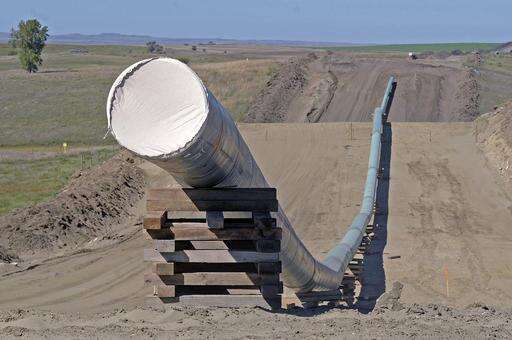
FILE - This Sept. 29, 2016, file photo, shows a section of the Dakota Access Pipeline under construction near the town of St. Anthony in Morton County, N.D. The Army has notified Congress Tuesday, Feb. 7, 2017, that it will allow the $3.8 billion Dakota Access pipeline to cross under a Missouri River reservoir in North Dakota, completing the four-state project to move North Dakota oil to Illinois. The Army intends to allow the crossing under Lake Oahe as early as Wednesday, Feb. 8. The crossing is the final big chunk of work on the pipeline. (Tom Stromme/The Bismarck Tribune via AP, File)
The Associated Press
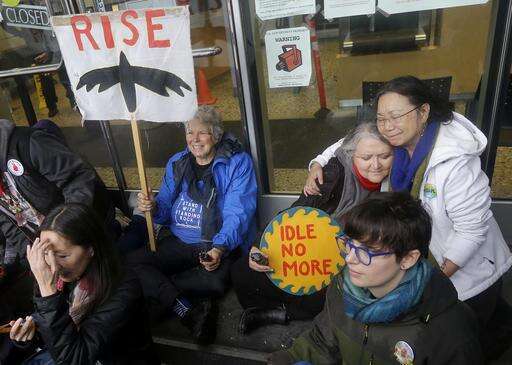
Pennie Opal Plant, second from top right, and other opponents of the Dakota Access oil pipeline block an entrance to the San Francisco Federal Building in San Francisco, Wednesday, Feb. 8, 2017. Opponents of the Dakota Access oil pipeline called for protests around the world Wednesday as the Army prepared to greenlight the final stage of the $3.8 billion project's construction. (AP Photo/Jeff Chiu)
The Associated Press

People standing outside developer Energy Transfer Partners headquarters protest the Army Corps of Engineers approval of the final section of the Dakota Access oil pipeline, Tuesday, Feb. 7, 2017. The Army said Tuesday that it will allow the $3.8 billion Dakota Access oil pipeline to cross under a Missouri River reservoir in North Dakota. The developer had hoped to have the pipeline operating by the end of 2016, but construction has been stalled while the Army Corps of Engineers and the Dallas-based company battled in court over the crossing. (Tom Fox/The Dallas Morning News via AP)
The Associated Press
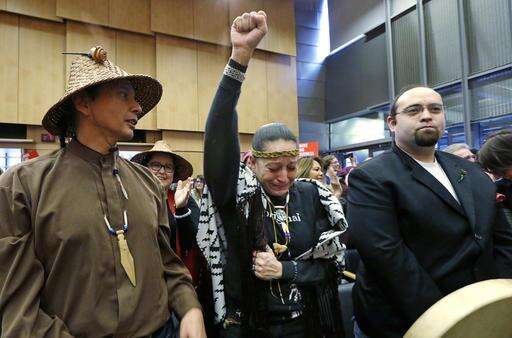
Olivia One Feather, center, of the Standing Rock Sioux tribe, holds her fist up and cries tears of happiness after the Seattle City Council voted to divest from Wells Fargo over its role as a lender to the Dakota Access pipeline project and other business practices, Tuesday, Feb. 7, 2017, in Seattle. Wells Fargo manages more than $3 billion of Seattle's operating account. (AP Photo/Elaine Thompson)
The Associated Press
Trash is seen piled in a dumpster at an encampment set up near Cannon Ball, N.D., Wednesday, Feb. 8, 2017, for opponents against the construction of the Dakota Access pipeline. Opponents have called for protests around the world Wednesday, Feb. 8, 2017, as the Army prepared to green-light the final stage of the $3.8 billion project's construction. The Army said Tuesday, Feb. 7, that it will allow the four-state pipeline to cross under a Missouri River reservoir in North Dakota, the last big chunk of construction. (AP Photo/James MacPherson)
The Associated Press
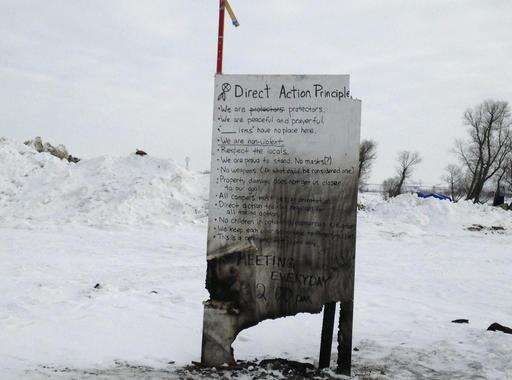
A sign is seen at an encampment set up near Cannon Ball, N.D., Wednesday, Feb. 8, 2017, for opponents against the construction of the Dakota Access pipeline. Opponents have called for protests around the world Wednesday, Feb. 8, 2017, as the Army prepared to green-light the final stage of the $3.8 billion project's construction. The Army said Tuesday, Feb. 7, that it will allow the four-state pipeline to cross under a Missouri River reservoir in North Dakota, the last big chunk of construction. (AP Photo/James MacPherson)
The Associated Press
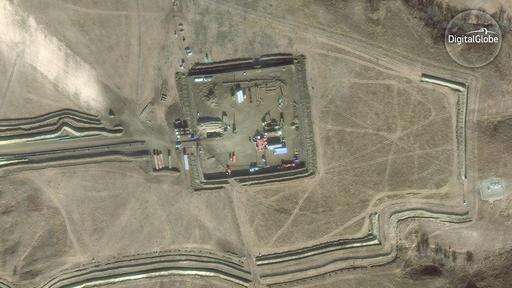
FILE - This Nov. 25, 2016, file satellite image taken by DigitalGlobe shows the construction site of the Dakota Access pipeline near Cannon Ball, N.D. Opponents of the pipeline called for protests around the world Wednesday, Feb. 8, 2017, as the Army prepared to greenlight the final stage of the $3.8 billion project's construction. The Army said Tuesday, Feb. 7, that it will allow the four-state pipeline to cross under a Missouri River reservoir in North Dakota, the last big chunk of construction. (DigitalGlobe via AP, File)
The Associated Press
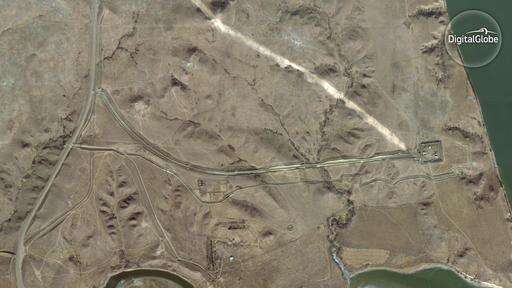
FILE - This Nov. 25, 2016, file satellite image taken by DigitalGlobe shows the construction site of the Dakota Access pipeline along the Missouri River, at right, near Cannon Ball, N.D. Opponents of the pipeline called for protests around the world Wednesday, Feb. 8, 2017, as the Army prepared to greenlight the final stage of the $3.8 billion project's construction. The Army said Tuesday, Feb. 7, that it will allow the four-state pipeline to cross under a Missouri River reservoir in North Dakota, the last big chunk of construction. (DigitalGlobe via AP, File)
The Associated Press