Skip to content

Cavern excavation completed for Fermilab-based neutrino experiment

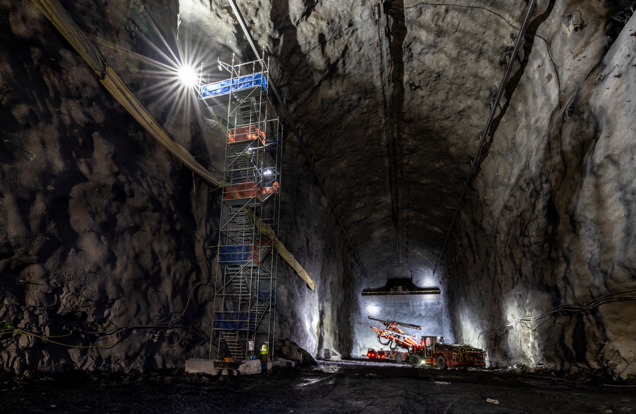
Construction workers have finished creating two caverns, each more than 500 feet long and about seven stories tall, for the gigantic particle detector modules of the Deep Underground Neutrino Experiment, hosted by Fermilab. Another cavern will house utilities for the operation of the detector.
Matthew Kapust, Sanford Underground Research Facility
Construction workers have finished creating two caverns, each more than 500 feet long and about seven stories tall, for the gigantic particle detector modules of the Deep Underground Neutrino Experiment, hosted by Fermilab. Another cavern will house utilities for the operation of the detector.
Susan Sarkauskas, Daily Herald reporter, writer, employee, staff. (Daily Herald)
PUBLISHED:
Getting your Trinity Audio player ready...

Workers have finished excavating the caverns in South Dakota that will house four particle detectors for the Fermilab-based Deep Underground Neutrino Experiment.

The three caverns, located a mile below the surface, are the core of a new research facility that spans an underground area about the size of eight soccer fields. Two caverns will house the detectors; the third will house utilities.

Neutrinos will be sent from Fermilab in Batavia 800 miles west to liquid argon-filled detectors at the Sanford Underground Research Facility in Lead, South Dakota. The goal is to have the first detector operating by the end of 2028.

Scientists will study the behavior of neutrinos to answer questions such as why the universe is composed of matter and how an exploding star creates a black hole.